

Please follow us on Gab, Minds, Telegram, Rumble, Truth Social, Gettr, X, Youtube
Israel is gearing up for a major ground offensive in southern Lebanon, with plans to seize control of territory south of the Litani River and dismantle Hezbollah’s military infrastructure, according to Israeli and U.S. officials. The operation, if fully launched, would represent the most significant Israeli ground incursion into Lebanon since the 2006 Lebanon War and could further entangle the country in the escalating regional conflict involving Iran.
The planned expansion follows a large-scale Hezbollah missile barrage earlier this week, which included over 200 rockets targeting northern Israel, alongside additional projectiles from Iran. Israeli officials indicated that this attack eliminated any remaining consideration of a ceasefire, accelerating preparations for a broader ground campaign.
A senior Israeli official described the objectives as taking over the area south of the Litani River, pushing Hezbollah forces northward away from the border, and destroying weapons depots, launch sites, and other military positions in villages. The tactics could mirror those employed in Gaza, where structures suspected of housing weapons or serving as firing points have been systematically targeted and demolished.
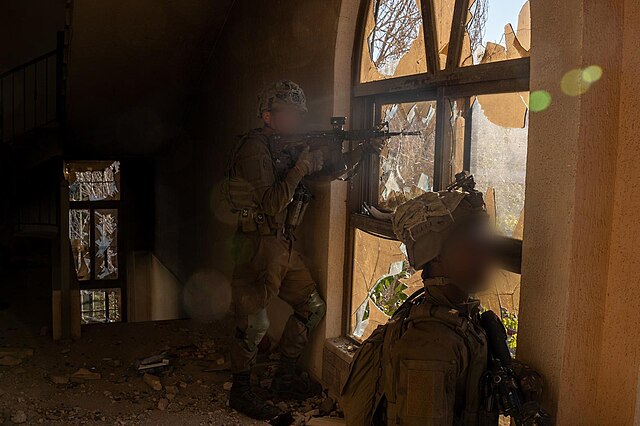
The Israel Defense Forces (IDF) have already positioned three armored and infantry divisions along the Lebanese border, with limited ground incursions reported over the past two weeks. Recent actions include strikes on infrastructure, such as the destruction of a bridge over the Litani River, which Israel claimed was used by Hezbollah for movements.
Hezbollah leader Naim Qassem has issued stark warnings in response, declaring that any ground invasion would trigger direct, close-quarters combat with the group’s fighters. He emphasized that diplomatic efforts have failed to safeguard Lebanese civilians or sovereignty, insisting that “there is no solution except resistance.” Qassem described the situation as an existential battle, with Hezbollah prepared for a prolonged confrontation and ready to surprise Israeli forces on the battlefield.
The intensifying conflict has triggered a severe humanitarian crisis in Lebanon. Israeli evacuation orders now extend across southern Lebanon, including areas north of the Litani River and parts of southern Beirut identified as Hezbollah strongholds. Reports indicate that around 800,000 civilians have been displaced, with at least 773 people killed—many of them civilians—since the latest escalation began in early March.
The Trump administration has voiced support for Israel’s efforts to neutralize Hezbollah’s military capabilities while pressing for measures to minimize damage to Lebanese state institutions. U.S. officials have reportedly urged Israel to refrain from targeting critical infrastructure, such as Beirut’s international airport. Simultaneously, Washington is advocating for direct negotiations between Israel and Lebanon—potentially mediated through U.S. channels—to secure a ceasefire and establish the foundation for a formal peace agreement, ending the technical state of war that has persisted since 1948.
The developments come amid a broader Middle East war involving U.S. and Israeli operations against Iran, with Lebanon emerging as a major flashpoint following Hezbollah’s renewed engagement on the front lines.


